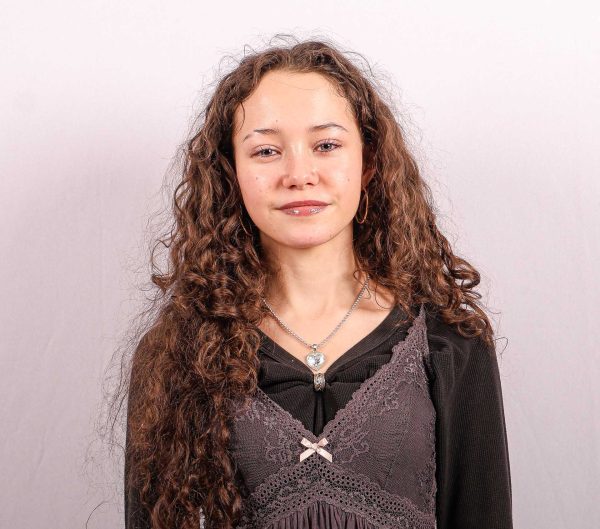
Reese sat on the yellow lawn mower while her best friend wound up and down her family’s compound, smelling freshly cut grass before heading to his house to eat.
They spread grape jelly with a butterknife, pressed the bread together and enjoyed the treat.
But in December of Reese’s kindergarten year, those moments became only a memory when Raymond Collins, or as she called him, Peepaw, died.
That moment kicked off a series of events leading her on a path from child to athletic trainer to future educator.
All over again
Five months later, Reese’s younger brother Cayton was born. However, just a year later, Cayton became sick.
The amniotic fluid from the womb was stuck in his ears, stacked with separate digestive and allergy issues. Reese, still reeling from her great grandfather’s death, panicked.
“‘I just need him to get better, I need him to get better,’” Reese remembered thinking. “I think losing my Peepaw made me soak up more time with my brother whenever he was younger because I knew people could just be taken away from me no matter how close I was to them.”
After visits with an ear, nose, and throat doctor, Cayton recovered. In the years since, Reese now knows she needed to learn to heal people like doctors did for her family. That’s where athletic training came in.
“I can be that person and help, even if that’s not what I want to do as a career,” Reese said.
The Side Gig
Reese applied to be an athletic trainer in eighth grade which included an anxious tryout against an unusually large group where she demonstrated the basic first aid skills as the varsity trainers watched.
Reese got the spot, and, in the four years since, she’s earned certification in Stop the Bleed training, CPR, AED and first aid.
Reese has seen it all: dislocated joints, misaligned limbs, pulled muscles and cold-induced nosebleeds. Regardless, Reese helps the athletic community she’s grown to love, filling the role her younger self never could within her own family.
“I care so much about every single athlete that walks through our training room doors,” Reese said. “I enjoy being able to see the growth and everything, watch these football players that came in freshman year now play full level varsity. I like seeing their growth both as an athlete and medically.”
Reese strives to deliver the best medical experience for her patients because she has seen loved ones suffer from illnesses.
“I want to provide that same level of care and love for my athletes that I’ve seen doctors and nurses do for my brother and for my grandfather,” Reese said.
However, treating injured athletes requires her to emotionally check out.
“I cannot let the athlete see how I’m feeling,” Reese said about tending to a wrestler with an elbow dislocation. “They can see no expressions because I don’t want to worry them. He’s not allowed to see because he could go into shock.”
Reese criticizes herself when she thinks she could have done better.
“‘What more information could I have collected, how can I make sure I respond quicker,’” Reese said she thinks. “Those are the things that matter when you’re an athletic trainer.”
Reese is the happiest when counting and organizing inventory and comparing taping ankles to geometry angles, which she said is the same without the math — a topic that always clicked.
“Everything always has an answer,” Reese said. “I also think very numerically, I’m a number person. So, visualizing things in numbers makes more sense to me.”
The Solution
Despite athletic training checking the box for wanting medical practice, Reese is pursuing a career as a high school math teacher.
The realization happened during the pandemic while tutoring her brother Cayton and several friends.
“‘You need to be teaching,’” Reese said she decided.
Comparatively, Reese said teaching removes the stress of waiting for the next injury as an athletic trainer.
“I can chill out a little bit more; I don’t constantly have to be seeing what my kids are doing the entire time,” Reese said. “I can trust that they aren’t going to hurt themselves. I can trust that they hopefully won’t dislocate their elbow doing a math warmup.”
Reese has been in the learning and education pathway since freshman year and joined the Texas Association of Future Educators in her sophomore year. As part of her training, Reese taught a new unit to Gretchen Kloes’ AP Calculus AB class.
Reese loves watching the moment a student connects the dots.
“It’s very apparent with math,” Reese said. “It’s one of my favorite things to see and watch and help make happen.”
When helping sort test reflections for Kloes’ class, Reese identifies trends to better understand learning styles.
“Sometimes they’ll be like, ‘Can we do more like Wayground quizzes, a Gimkit, a Kahoot thing?,’” Reese said. “We have been interpreting a whole lot more of those into our classes, and I’ve noticed students being a bit more engaged.”
Reese believes her motivation for teaching will remain steady thanks to the sense of purpose it brings to her life.
“My passion will just grow, continuously,” Reese said. “Whenever I see that student fully connect and understand everything, it just adds fuel to the fire.”